Estimated tax is a self-sent installment toward the year’s income tax, used for income that a paycheck is not already slicing. Form 1040-ES is the worksheet-and-voucher package that figures those installments. The four payment windows become credits on the annual Form 1040. They are not withholding, and they are not four mini-returns.

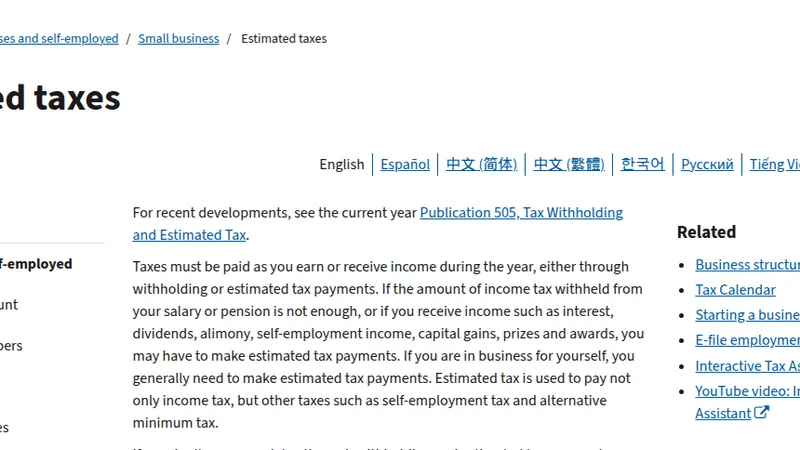
The IRS wants money during the year, in the taxpayer’s name, without waiting for April. Employees have an employer and a Form W-4. Self-employment, gig work, interest, dividends, rents, and other income that never hits a wage stub do not. Estimated tax is the other pipe. The 2026 edition of Publication 505 says that if you don’t pay enough through withholding, you might have to pay estimated tax — and that the same payments also cover self-employment tax.
Who Form 1040-ES is for
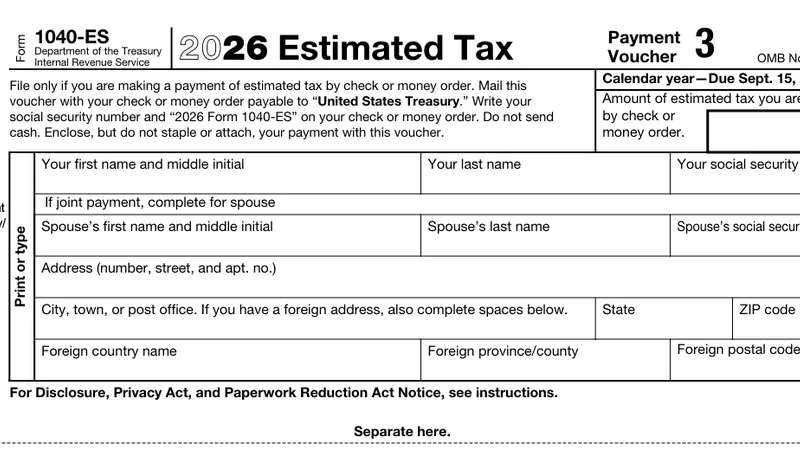
Form 1040-ES is titled Estimated Tax for Individuals. It is not a return. The February 12, 2026 package is a worksheet that produces a number, plus vouchers if the payment goes by check. Individuals — sole proprietors, partners, S corporation shareholders — generally use it when they expect to owe at least $1,000 after subtracting withholding and refundable credits.
The same package states the general rule for 2026. Both tests have to be met: that expected balance is at least $1,000, and withholding plus refundable credits is smaller than the smaller of 90 percent of the 2026 tax or 100 percent of the tax shown on the 2025 return. The 2025 return has to cover all 12 months. If 2025 adjusted gross income was more than $150,000 — $75,000 if the 2026 filing status is married filing separately — the prior-year test uses 110 percent instead of 100 percent. Those are safe-harbor tests, not a household instruction.
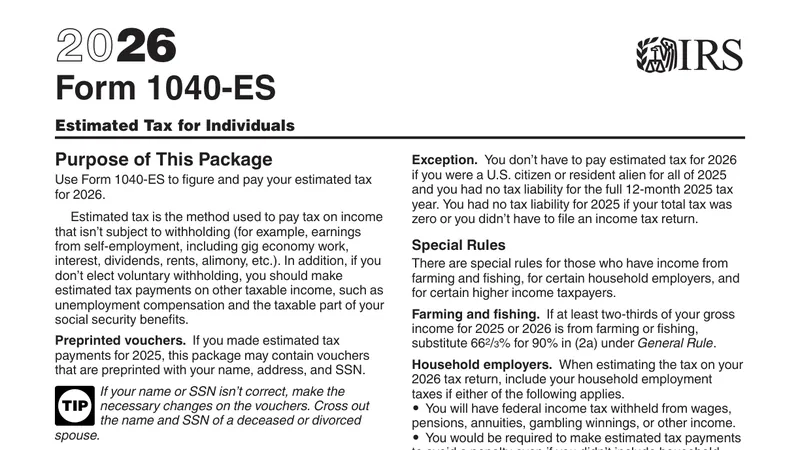
There is an exception. Estimated tax is not required for 2026 if the person was a U.S. citizen or resident alien for all of 2025 and had no tax liability for that full 12-month year — total tax of zero, or no return required.
People who also have wages can raise paycheck withholding on Form W-4 instead of sending estimated payments on the other income. That is the same Treasury. It is a different pipe.
Four windows, one Form 1040
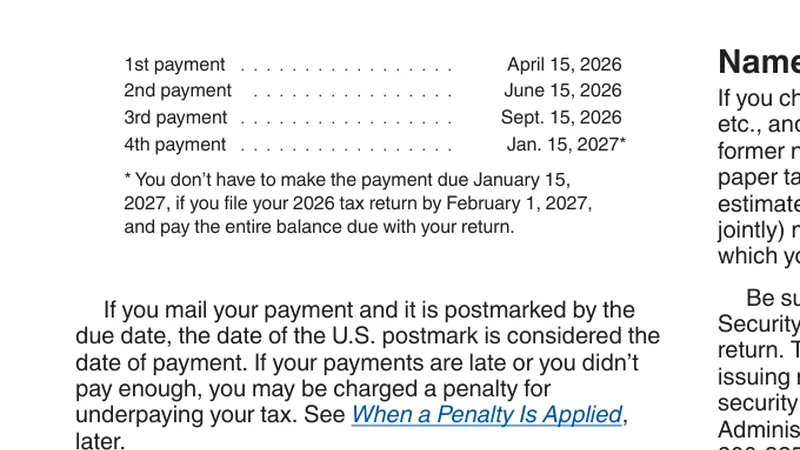
For estimated tax, the year is four payment periods. They are not four even calendar quarters. The IRS table, last reviewed December 4, 2025, runs January 1–March 31 (due April 15), April 1–May 31 (due June 15), June 1–August 31 (due September 15), and September 1–December 31 (due January 15 of the following year).
The February 12, 2026 Form 1040-ES dates those as April 15, 2026; June 15, 2026; September 15, 2026; and January 15, 2027. The whole amount can go in by April 15, or in four amounts by those dates. The January 15, 2027 payment can be skipped if the 2026 return is filed by February 1, 2027 and the entire balance is paid with it.
The annual Form 1040 is the reconciliation. Estimated payments already sent are a credit, along with any overpayment applied from the prior year. Withholding is a credit on the same return. If the year’s tax is larger than those credits, a balance due. If smaller, a refund. A tax credit and a tax deduction live on that return. They change the tax the installments were aiming at. They are not claimed on a 1040-ES voucher.
If not enough tax is paid by each period’s due date, a penalty can apply even if a refund appears when the return is filed. Form 2210 is where that arithmetic is shown.
Not the same pipe as withholding
Withholding is the employer subtracting from a paycheck using Form W-4 and Publication 15-T, then remitting in the employee’s name. The employee never holds those dollars. Estimated tax is the taxpayer sending money because no employer is doing that job for that income.
The two credits are not timed the same way. The 2025 Form 2210 instructions say that withheld federal income tax is considered paid one-fourth on each payment due date unless the return shows otherwise. Estimated payments are credited when they are paid. A large January transfer does not repair a missed April window. Extra withholding late in the year, under the default rule, is spread across the four dates. Self-employment tax is part of the 1040-ES figure. It is not income-tax withholding on a Form W-2.

The paper voucher is optional. The same installment can go through an online account, Direct Pay, or EFTPS. The form is the worksheet. The payment is the credit.
Confirm the current Form 1040-ES, Publication 505, and due dates at the IRS. This is a description of the mechanism, not a filing position.