An overdraft and an NSF are two bank answers to one fact: a payment has arrived that is larger than the funds the bank is willing to treat as available. If the bank pays the item, the ledger can go negative and the fee — when there is one — is an overdraft fee. If the bank returns the item unpaid, the payee does not get the money and the fee — when there is one — is an NSF fee, also called a returned-item fee. The instruction did not change. The decision did.

One debit, two ways to answer it
Follow a single item. A utility originates an ACH debit for $180. Available funds on the account are $40. The file has already named a bank and an account. What is left is a receiving-bank choice: pay a debit the available balance cannot cover, or send it back.
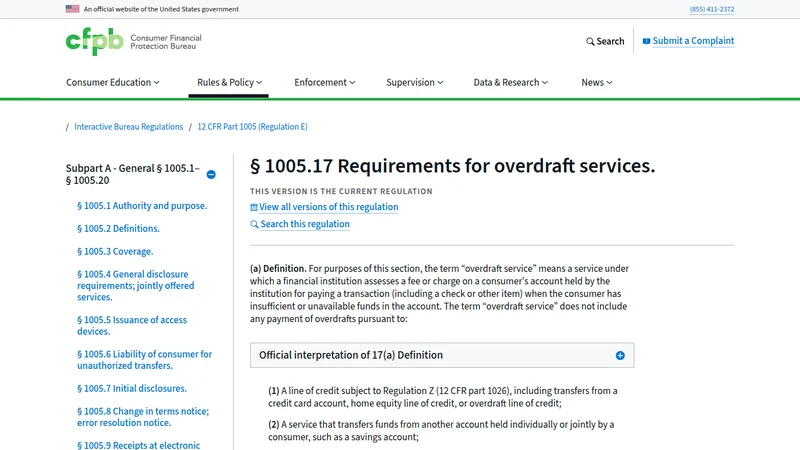
Pay it, and the $180 posts. Current balance, and usually available balance, go negative by the shortfall. Regulation E defines an “overdraft service” around that act — assessing a fee or charge for paying a transaction, including a check or other item, when the consumer has insufficient or unavailable funds. The fee is for paying, not for the size of the hole.
Return it, and the $180 does not stay as a paid debit. On ACH that is a return for insufficient funds. The utility is not credited. The CFPB treats that path as a different event: the institution declined to make the payment after finding the account short. If it charges for the decline, the charge is the NSF fee. Some institutions return the item and charge nothing. A fee is a policy, not a requirement of the return.
The comparison is to available funds, not to a vault count. A deposit hold can leave a posted credit that still cannot cover the debit. The rule’s phrase is “insufficient or unavailable.” The hold is why the larger number on the screen is not the number the decision used.
A third cover sits outside both fees. Funds can move from a linked savings account, or from a line of credit that is actual credit under Regulation Z. Those transfers are carved out of the “overdraft service” the opt-in rule is about.
Regulation E only fences the card and the ATM
Checks and ACH debits were never put on the opt-in. A bank may still pay them into a negative balance and charge an overdraft fee, or return them and charge an NSF fee, under the account agreement. The ATM-and-debit choice does not have to change that. The rule goes further: the institution may not refuse to pay a check or ACH overdraft because the consumer declined the ATM and one-time-debit opt-in, and it may not hand that consumer a worse account for the same reason.
ATM withdrawals and one-time debit card transactions are the fence. Before a bank may charge a fee for paying those into overdraft, Regulation E — 12 CFR 1005.17 — requires a notice kept apart from other paperwork, a reasonable way to say yes, actual affirmative consent, and a written or electronic confirmation that the consent can be revoked. Silence is not consent. A pre-checked box is not consent. A signature on the general account contract is not consent. The default is that the consumer is not enrolled.
That is an opt-in, not an opt-out. It is also not an order to pay. After a yes, the bank may still decline the ATM or the debit. After a no, the bank may still pay one — it just may not charge a fee for doing it.
“One-time” is a coding. A grocery tap, a website charge, or a phone order is in the fence if the merchant sent it as a one-time debit. Recurring card payments sit with checks and ACH, outside the fee ban.

Why only one path prints a minus
On the pay path, the item posts as a debit larger than what was available. The current balance includes that debit. The number can show as negative. Available usually follows it down. A later overdraft fee is a second debit on the same ledger.
On the return path, the $180 is not kept as a paid debit. The screen may show a returned item, or it may show nothing from that payment at all. An NSF fee, if the bank still charges one, is a separate, smaller debit. It can push a thin remaining balance below zero. It does not recreate the unpaid $180 as a hole.
ATM and one-time debit without an opt-in are a third picture. The authorization is often refused at the terminal. Nothing posts. That decline is not the NSF return used for a check or an ACH debit, so the payment itself never has a chance to paint the balance red.
The awkward case is authorize-then-settle. A one-time debit can be authorized against a then-sufficient available balance and settle later, after other items have posted. The official interpretation of Regulation E is blunt: if the consumer did not opt in, the institution still may not charge an overdraft fee for paying that ATM or one-time debit, even if settlement finds the account short. The paid item can still leave a negative number. The fee is what the opt-in was about.

Confirm the current fee schedule, the opt-in record, and which balance the institution uses with the deposit agreement. This is a description of two decisions on one payment, not a recommendation of either.