FedNow and ACH are different rails. ACH is a batch messaging network. Banks send files of credits and debits to an operator, which sorts them and settles on banking days. FedNow is an instant payment service the Federal Reserve Banks operate: one customer credit at a time, any day of the year, with settlement that is final when the Reserve Banks record it. One does not replace the other.
“Send money” is the same consumer phrase on both rails. The clocks are not. ACH waits for a processing window because it was built to move a lot of ordinary payments — payroll, bills, tax refunds — without each one needing its own settlement conversation. FedNow was built for the opposite job: one credit, now, that does not come back. ACH can push or pull. FedNow is built around a credit transfer — a push from the sending institution. ACH reaches nearly every US depository institution. FedNow reaches the institutions that have signed up, and only when both ends of the payment have.
A file versus a single credit
ACH is store-and-forward. Items sit until a window. Same-day ACH can settle on the banking day it is sent if it meets the operator deadline and stays under the per-payment cap of one million dollars (as of August 21, 2026). Ordinary items settle the next banking day. Settlement still needs the Federal Reserve’s settlement service to be open. That service is closed on weekends, on federal holidays, and overnight on business days from 6:30 p.m. to 7:30 a.m. Eastern. The batch is cheap and familiar. It is also why a Friday evening transfer can look like it is in motion and still be waiting for Monday.

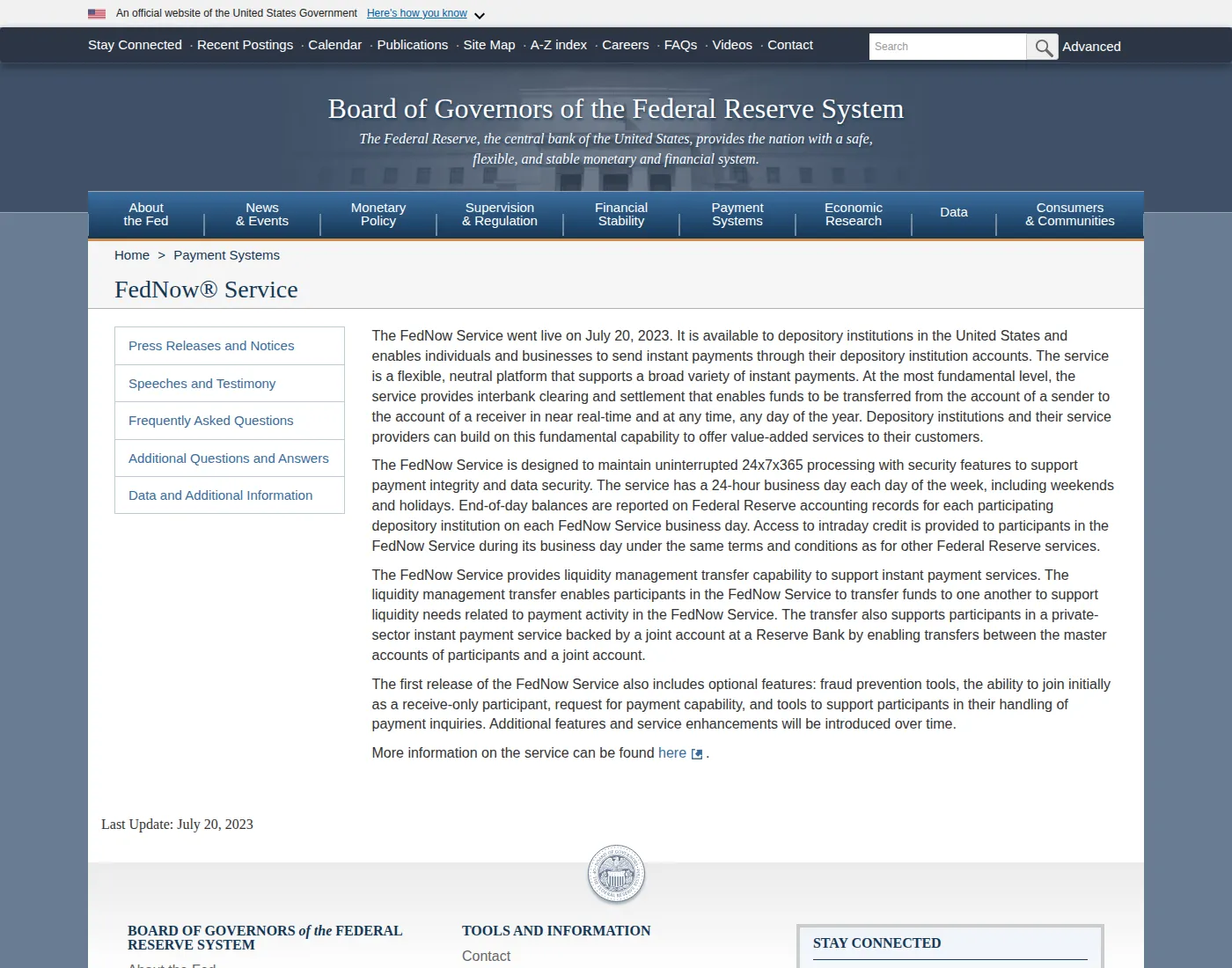
FedNow processes messages continuously, 24 hours a day, every day of the year, including weekends and holidays. The Board’s about page calls that uninterrupted 24x7x365 processing. A customer credit transfer is one payment. The sending institution and the receiving institution each have to accept that message. The service settles by debiting and crediting master accounts at the Reserve Banks. Operating Circular No. 8 says settlement is final at the earlier of when the service records those entries or when it sends an advice of credit. A later return is a new payment, not an unwind of the first one. That sentence is the whole product: finality first, cleanup later if anyone still wants to send money the other way.
Reach is not automatic
Almost every US depository institution can send and receive ACH. FedNow is opt-in. Banks and credit unions of all sizes can sign up. Until both ends participate, the instant credit cannot complete on that rail. The Board’s FAQ, last updated July 17, 2024, says the service operates alongside FedACH, Fedwire, and the other payment services — a modern system, not a replacement. Sign-up happens gradually. There is no FedNow consumer app. The Reserve Banks do not hold the household account. An app that says “instant” is using a bank that has plugged into the service, or it is using something else and borrowing the word.

The network itself allows a customer credit transfer up to ten million dollars (as of August 21, 2026, after a November 12, 2025 increase). Each participant can set a lower cap. That limit is not a reason to treat FedNow as a substitute for ACH payroll files or recurring authorized debits. ACH still carries both pushes — direct deposit of a paycheck is the usual credit — and pulls. FedNow’s first release also includes an optional request-for-payment message. The value still moves as a credit if the payer’s institution sends one. A request is not a debit. The money still has to be pushed.

What the posted number is not
A FedNow credit that has settled is final between the banks. That is not a promise that an app label is correct, or that a sending customer named the right account. ACH items can come back: unauthorized debits, wrong account numbers, insufficient funds. Return windows and federal electronic-fund-transfer dispute rules sit on that rail. Naming FedNow does not move those rules onto it. The interesting mismatch is that the faster rail can be less forgiving, because finality was the feature.

The two rails can sit on the same deposit account. A paycheck can still arrive as an ACH credit. A bill can still leave as an ACH debit. An instant push, if both banks offer it, can sit next to those files. Confirm the current rule with the deposit agreement and the Reserve Banks that operate the service.