A mutual fund capital-gains distribution is the fund paying you your slice of a gain it already locked in by selling something it owned. It is not the share price going up. It is not the expense ratio. Cash or new shares leave the fund, so net asset value typically falls by about the per-share payout on the ex-date. In a taxable account, Form 1099-DIV can still show that amount even if you never sold a share.

Follow one year inside the portfolio, not one tap in an app.
March: the fund sells. You do not.
You own shares of the fund. The fund owns the portfolio — the same stack as an index fund. In March the adviser sells a holding the fund bought years ago for less than today’s price. That sale is the fund’s capital gain. The SEC’s investor guide is blunt: when a fund sells a security that has increased in price, the fund has a capital gain.
NAV already had the higher price in it. After the sale the fund holds cash instead of the stock. Nothing was mailed to you. The gain is now realized inside the pool.

The rest of the year: gains net against losses
Other sales cut the other way. A loser offsets a winner. The Investor.gov mutual-funds page says that at the end of the year the fund distributes these capital gains, minus any capital losses. The 2025 Schedule D instructions add the character: a payout of net realized long-term capital gains is the capital-gain distribution. Net realized short-term capital gains are not treated as capital gains on your return. They ride with ordinary dividends on Form 1099-DIV.
Unrealized appreciation is the third way the SEC lists for making money in a fund: the portfolio is worth more, so NAV is higher. That is not a distribution. It is still sitting in the shares.
December: the payout, then the NAV drop
Most funds pay this once, late in the year. The prospectus is the fund’s own calendar. Shareholders of record get the distribution. On the ex-date the money is no longer an asset of the fund.
The Fund Distributions Investor Bulletin: when a fund distributes capital gains to shareholders, NAV decreases. That decrease is not a loss. It is a transfer of value — cash or new shares — to you.
Arithmetic, not a forecast. Yesterday’s NAV is $30. The capital-gains distribution is $1.50 a share. Today’s NAV is about $28.50, plus or minus whatever the portfolio did in the market that day. If the default is reinvestment, you hold more shares at the lower NAV. Publication 550 (2025) says most mutual funds let you automatically reinvest distributions instead of taking cash, and that buying more shares at fair market value does not make the amount disappear from income.
The expense ratio is a different subtraction. Operating expenses come out of fund assets through the year and never show up as a 1099-DIV line. A distribution is a payout of what the fund already realized.
January: the 1099-DIV, even if you sat still
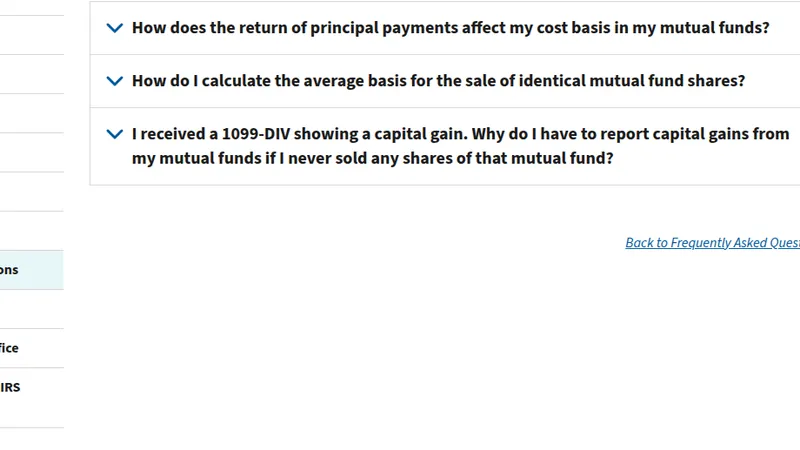
Form 1099-DIV, box 2a, is labeled total capital gain distributions from a regulated investment company. Publication 550: report them as long-term capital gains, regardless of how long you owned the fund shares. The IRS FAQ on the same point is the question people actually type: why a capital gain on a fund you never sold. Because the fund sold.
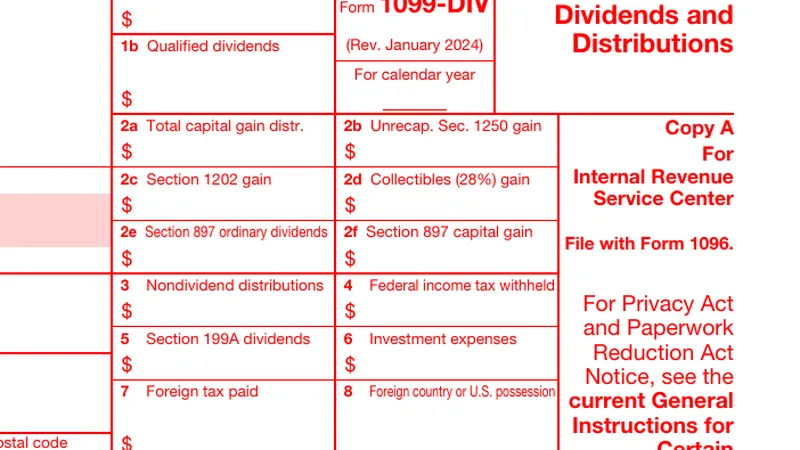
Reinvestment does not change the box. The bulletin says you might have to pay tax on the fund’s capital gains even if you reinvest. The SEC guide goes further: that can be true in a year the fund’s return was negative and you sold nothing.
This is income a paycheck did not slice. Estimated tax is the other pipe if withholding will not cover it. A 1099-DIV is not a 1099-B. Selling your own fund shares is a different gain or loss, on a different form, using a basis that should include those reinvested shares.

Confirm the current distribution dates with the fund, the boxes on the 1099-DIV, and the IRS and SEC materials that define them. This is a description of the mechanism, not a recommendation to buy or sell any fund.